RGSCP Faculty & Staff

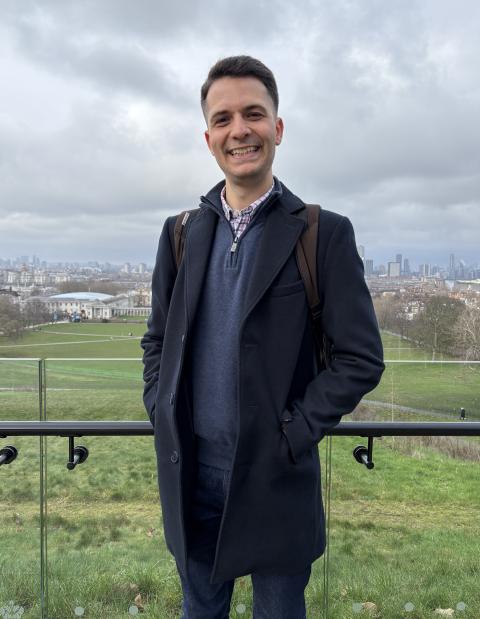
Stephan Nitu
Postdoctoral Research Associate, Responsible Governance and Sustainable Citizenship Project
Dr. Stephan Nitu (PhD Oxford) is the RGSCP postdoctoral fellow. An ancient historian with a dual interest in the Classical Athenian economy and the value of the humanities writ large, he teaches courses on democracy, individuals, and societies in the ancient world. His most recent work, Humanities Forward (with Arlene Holmes-Henderson MBE), presents an international and collaborative argument for the humanities’ relevance today—to policymakers, academics, and the public. The book is available to read open access (include link to https://www.liverpooluniversitypress.co.uk/doi/book/10.3828/9781805967446).

Brian Wolfel
Democracy Fellow/Lecturer, Responsible Governance and Sustainable Citizenship Project
Brian Wolfel is passionate about interdisciplinary teaching and research in the humanities and social sciences. Brian's teaching and research focuses on the history of political thought, intellectual history, and American politics. Specifically, his research explores the vulnerabilities of American democracy and the prospects for reform with respect to social problems such as economic inequality, hyperpluralism, social atomization and alienation, and the challenges of technology. He also explores the relationship between Plato's philosophy and the modern political thought of Thomas Carlyle and Ralph Waldo Emerson. He is the author of Thomas Carlyle and the Political Universe: From American Transcendentalism to an Elusive Post-Liberalism and has published articles in Telos, Utopian Studies, and Carlyle Studies Annual.


RGSCP Steering Committee
RGSCP is overseen by a steering committee:
Robert Ambrose, former Senior Deputy Secretary of State of New Hampshire
Michele Dillon, Dean of the College of Liberal Arts (UNH)
Michael Leese, Associate Professor of History (UNH)
Scott Smith, Professor of Classics, RGSCP Director (UNH)
Kimberly Babbitt, Chief Sustainability Officer and Executive Director of the Sustainability Institute (UNH)
